
From the author
Harte Twain
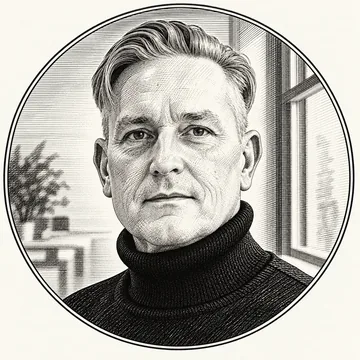
I turned fifty-six today. That’s in the past tense, although as I write this it is in my future. Writing really messes with the timeline.
I don’t feel fifty-six (or, I won’t). I have no idea what fifty-six is supposed to feel like. I assume the answer is (will be) roughly this, since I’ve (will have) now accumulated several hours of firsthand experience.
Birthdays have a way of encouraging inventory. What did I do with the last year? What have I done with all the years before it? Who is still here? Who isn’t? Which parts of the person I was at twenty-six, or thirty-six, or forty-six survived long enough to arrive at fifty-six with me?
For no apparent reason, I’ve also been thinking about friendships that broke. No apparent reason at all.
Some friendships end loudly. Some just thin out until there isn’t much left to call a friendship. Some end for reasons you understand, others for reasons you only think you understand, and a few make considerably more sense once you’ve had the good fortune to get some distance from them. There are people you once couldn’t imagine not knowing who you now know mostly in the past tense.
This isn’t particularly tragic. It’s just what happens if you live long enough to accumulate both friends and history.
Which, for reasons that will make more sense eventually, got me thinking about Bret Harte.
There’s another reason Harte came to mind: I live in Twain Harte, California, a little mountain town in the Sierra Nevada foothills named for two nineteenth-century writers who were once friends and eventually couldn’t stand each other.
I’ve known that for quite a while, although I’ve recently discovered it’s not nearly as widely known around here as you might expect. Twain Harte is one of those place names that sounds perfectly normal once you’ve said it enough times. You stop wondering where it came from.
But it came from somewhere. Mark Twain. Bret Harte. Two famous writers associated with Gold Rush California. Put the names together, as someone once did, and you get Twain Harte.
There is one small problem with this arrangement. The town should probably be called Harte Twain.
I realize proposing a name change is an excellent way to celebrate my fifty-sixth birthday by being run out of town, so I will not be bringing this proposal before what passes for local government in unincorporated Twain Harte. But Harte got there first.
When Samuel Clemens was still on his way to becoming Mark Twain, Bret Harte was already an important figure in the California literary world. He encouraged Twain’s work and became something of a mentor. A few years later, Twain gave Harte the manuscript that would become The Innocents Abroad. Harte went through it and told him what to cut. Twain listened. He would later credit Harte with helping train and polish him as a writer.
I find this delightful. Bret Harte edited Mark Twain. Somewhere in the history of American literature, before Twain became a name recognizable enough to donate half of it to a mountain town, Bret Harte was standing over the manuscript with the nineteenth-century equivalent of Track Changes saying, essentially, lose this paragraph. Twain listened, and then he became Mark Twain.
So: Harte Twain. I’ve made my case. Unfortunately, their relationship became less charming after that.
They remained friends, but friendship acquired competition. Both were ambitious. Both were writers. Both became famous. Twain could be jealous of Harte’s success. Harte had money problems. Eventually they did what two writers who already had a complicated friendship should probably never do: they collaborated.
The result was an awful little play (on several levels) called Ah Sin. It did not do much to advance American theater. More relevant to us, it did not save the friendship.
Their collaboration became strained. Money entered the picture. So did ego, resentment, creative disagreement, and all the other ingredients human beings have been using to ruin perfectly good relationships since long before either man picked up a pen. By 1877, the friendship had collapsed beyond hope of recovery.
That makes the name of my town much more interesting to me.
Twain Harte wasn’t named while the two men were out here drinking together, trading manuscripts, insulting editors, and doing whatever else nineteenth-century writers did before social media made their grievances searchable. Both men spent time elsewhere in the surrounding Gold Country, Twain famously not far away at Jackass Hill, but as far as I can tell neither ever actually set foot in the little patch of Sierra Nevada real estate that would later bear their names.
In the early 1920s, Alonzo and Keturah Wood bought land here and set about developing a summer resort community. Keturah Wood chose the name Twain Harte after two of her favorite authors. In 1924, Twain Harte Lodge was officially registered with the State of California.
Both writers were dead by then, which is important because neither of them could object.
Keturah Wood apparently didn’t care that the men had fallen out. She may not have even known. She liked Mark Twain. She liked Bret Harte. She needed a name for the place. Twain Harte. Done.
Or, she may have been stirring the pot. That read makes me like Keturah even more.
There is something almost offensively tidy about what history did to their disagreement. The friendship mattered while it existed. Then it ended. The anger mattered too. Twain, particularly, could remain spectacularly angry about people long after the practical usefulness of the anger had expired. But eventually two entire human lives, with all their ambition, affection, rivalry, generosity, jealousy, collaboration, and resentment, became literary history.
Then a woman in the Sierra Nevada decided she liked both of their books. Or something else.
I wonder what either man would have made of that. I suspect Twain would have had something to say. I suspect Harte would have edited it.
This is where Denis Diderot wanders into the essay, which you had to know he was going to do eventually. Or, maybe you’re new here and you didn’t know that at all.
I enjoy reading Diderot partly because I love the way his mind works. I also find his refusal to remain inside a single intellectual lane reassuring. And as I get older, I need to work harder to keep my French practiced.
Philosopher, novelist, critic, encyclopedist, professional irritant. Denis Diderot could start with a question about morality and somehow end up talking about an actor, a painting, digestion, free will, or whether the person sitting across from him was making any sense. I recognize the impulse.
One of the most important friendships of his life was with Jean-Jacques Rousseau. Before Rousseau became Rousseau, before the books and philosophical battles and his increasingly complicated relationship with almost everyone around him, the two men were close. In 1749, when Diderot was imprisoned at Vincennes, Rousseau regularly walked out to visit him.
On one of those walks, Rousseau came across an announcement for an essay competition sponsored by the Academy of Dijon. The question, translated very loosely by someone with four years of high school French and exactly one university-level philosophy class to his name, was whether all this Enlightenment nonsense was actually making human beings any better.
Rousseau was, at the time, walking to visit his friend who’d been imprisoned for publishing a book that asked inconvenient questions about God. He concluded that perhaps things were not going as well as advertised.
Eventually, of course, the friendship broke.
One of the episodes that helped push it toward rupture sounds comically small from this distance. Diderot sent Rousseau his play Le Fils naturel. In it, a character who wants to withdraw from society is confronted with the observation that only the wicked man lives alone.
Rousseau had, inconveniently, withdrawn from Parisian society to live at the Hermitage. He was not, it should be noted, actually living alone. His longtime companion Thérèse and her mother lived there too. Eighteenth-century philosophers apparently had a somewhat generous definition of solitude.
Rousseau took it personally anyway. To be fair, he may have had reason to.
The sentence sat on top of larger disagreements about solitude, society, obligation, and the increasingly different directions their lives and ideas were taking. Rousseau threw Diderot’s own sentence back at him: « Vous avez dit qu’il n’y a que le méchant qui soit seul […] Philosophes ! Philosophes ! »
Diderot apologized, sort of: « Je vous demande pardon de ce que je vous dis sur la solitude où vous vivez. […] Oubliez ce que je vous en dis et soyez sûr que je ne vous en parlerai plus. »
Then, apparently unable to leave well enough alone, he added: « Adieu, le citoyen ! C’est pourtant un citoyen bien singulier qu’un ermite. »
Things deteriorated from there. In 1758, Rousseau sent Diderot his final letter. It began: « Il faut, mon cher Diderot, que je vous écrive encore une fois en ma vie […] le plus grand crime de cet homme […] est de ne pouvoir se détacher de vous. »
Diderot did not answer.
Their friendship was over.
I’ve spent an embarrassing amount of time thinking about these two broken friendships lately. For no apparent reason.
At twenty-six, I think I understood endings differently. I had lived enough life by then to have lost friendships, but not enough to understand what to do with the loss. When a relationship ended badly, I wanted the ending to explain everything that came before it. If this is who you turned out to be, perhaps I never really knew you. If we can hurt each other like this, perhaps we were never really friends. If something ended, the ending became evidence that whatever came before it had somehow failed.
There’s a too-satisfying neatness to that story. Thirty years later, I don’t think that anymore. One of the quieter benefits of turning fifty-six is that you have finally accumulated enough evidence to distrust some of your conclusions from twenty-six.
Bret Harte helped Mark Twain become a better writer, and later the two men came to resent one another. Rousseau walked miles to visit Diderot in prison, and years later he wrote Diderot a final letter that Diderot never answered. Both things can be true at the same time. The ending doesn’t get to travel backward and cancel the middle.
Not every friendship lasts. Some shouldn’t. People change. Circumstances change. Affection becomes obligation. Admiration acquires competition. Old injuries accumulate interest. Sometimes two people simply discover that the versions of themselves who fit together once no longer do. Sometimes they collaborate on a play.
But permanence is a strange test for whether something mattered. We don’t apply that test consistently anywhere else. Ellie, Radar, and Izzy aren’t less beloved because one terrible day we will have to say goodbye. Maybe relationships deserve the same generosity.
I’ve come to think belonging deserves it too. I’ve spent much of my time here trying to understand what it means to belong to Twain Harte, and for a long time I thought belonging worked almost like citizenship. You arrived outside it and slowly accumulated evidence: time, relationships, knowledge, participation. Eventually, perhaps, enough of those things added up and you got your badge. LOCAL.
When Michael and I first started coming up here, we were occasional visitors. Then we became regulars, then residents. Then I wandered into a wine bar, got involved with the Chamber, and through a series of decisions that seemed perfectly reasonable individually became the sort of person who has opinions about the civic life of our town.
Somewhere along the way, the place became home.
I don’t think belonging works like citizenship anymore. I think belonging is a relationship, and relationships are alive. They deepen and weaken. They survive absences and arguments. They carry history. They change as the people inside them change. Two people can even understand the same relationship differently. Most importantly, a relationship doesn’t have to be permanent to have been real. That feels like something I’m old enough now to stop arguing with.
So today (in six days, actually), at fifty-six, I find myself taking a different kind of inventory. There are people who were enormously important to me who aren’t part of my life anymore, and friendships that survived versions of me I barely recognize. There are people I’ve disappointed and people who disappointed me. There are relationships I wish had ended differently, others I’m grateful didn’t end at all, and a few whose endings I can finally look at without needing to put either of us on trial.
Whatever happened afterward doesn’t reach back through time and remove the conversations, the dinners, the favors, the stupid jokes, the kindnesses, the arguments, the things we taught one another, the walk to the prison, the shitty plays, or the ways we changed one another. They happened. They count.
Twain Harte itself may be my favorite evidence. Mark Twain and Bret Harte were friends, and then they weren’t. They helped each other, admired each other, competed with each other, worked together, disappointed each other, and eventually carried very different versions of the relationship away with them. Then they died, and a couple of decades later Keturah Wood looked at this particular patch of pine trees, thought about two writers she loved, and put them back together. Or something else.
Not reconciled, exactly. History didn’t repair their friendship. It did something stranger: it kept both names. Today they share road signs, businesses, addresses, a post office, a lake, a golf course, and a Chamber of Commerce. They sit together on maps and websites and weather reports. People who have never read either writer say both names in one breath when somebody asks where they live. Whatever happened between the two men, the place kept both of them.
Birthdays want us to count things: years, accomplishments, regrets, people we’ve lost, people who stayed. But this year, I find myself less interested in counting and more interested in accepting that something can end without having been a mistake. The pencil marks are still on the manuscript. The walk to the prison still happened. I wonder if I’m finally mature enough to let those facts coexist with what came afterward.
There are worse places to turn fifty-six than a little town in the Sierra Nevada where two old friends who couldn’t remain friends have been stuck together for a hundred years because Keturah Wood liked their books, or something else.
Even if she got the order wrong.
* Written September 2, 2026.
Sources & Notes
Mark Twain Project Online Samuel L. Clemens to Francis Bret Harte, 1 May 1867; and Samuel L. Clemens to Elisha Bliss, Jr., 23 June 1868. Source →
For Harte’s early role as a mentor to Twain. The Mark Twain Project notes that Twain still looked on Harte as “something of a mentor” at this stage of their careers.
Mark Twain Project Online Samuel L. Clemens to Elisha Bliss, Jr., 23 June 1868. Source →
For Harte’s reading of The Innocents Abroad manuscript, his advice about what to cut, Twain’s claim that he “followed orders strictly,” and the surviving pages with Harte’s penciled suggestions.
University of Virginia, Mark Twain in His Times Ah Sin, a Play in Four Acts. Source →
For Twain and Harte’s 1876–77 collaboration, the competitive strain in their relationship, the breakdown of the partnership, and the play’s racial caricature. Contemporary reviews preserved by the archive also confirm that the play was, technically speaking, not very good.
Mark Twain Project Online Samuel L. Clemens to William Dean Howells, 15 October 1877. Source →
For Twain’s own postmortem on Ah Sin: he called it “a most abject & incurable failure.” This seemed worth preserving for the defense of “awful little play.”
Tuolumne County Twain Harte Design Review/Planning Advisory Guidelines. Source →
For the local history of Alonzo and Keturah Wood, the development of the summer resort community, Keturah’s choice of a name honoring two favorite authors, and the 1924 registration of Twain Harte Lodge. Her exact motivation beyond liking both writers remains, alas, unavailable.
Stanford Encyclopedia of Philosophy Jean Jacques Rousseau; Denis Diderot. Source →
For Rousseau and Diderot’s early friendship, Diderot’s imprisonment at Vincennes, Rousseau’s 1749 walk to visit him, and the Academy of Dijon competition that helped launch Rousseau’s philosophical career.
Jean-Jacques Rousseau Les Confessions, Livre IX. Source →
Primary text for Rousseau’s account of the quarrel over Diderot’s line “Il n’y a que le méchant qui soit seul,” his life at the Hermitage, and his conviction that Diderot’s remark was aimed, at least partly, at him.
Denis Diderot Correspondance, letter concerning Rousseau and the Hermitage. Source →
Primary text for Diderot’s apology about criticizing Rousseau’s solitude and the wonderfully ill-advised follow-up: “C’est pourtant un citoyen bien singulier qu’un ermite.”
Jean-Jacques Rousseau Letter to Denis Diderot, 2 March 1758. Source →
Primary text for Rousseau’s final letter to Diderot, including the painful admission that his greatest “crime” was being unable to detach himself from his old friend. Diderot did not reply.
History Workshop Journal “Philosophical Solitude: David Hume versus Jean-Jacques Rousseau.” Source →
For modern scholarly context on the Hermitage quarrel: Diderot’s “wicked man” line, Rousseau’s angry response, Diderot’s apology-plus-hermit jab, and the larger rupture over Rousseau’s retreat from society.